FREE Product-Led Storytelling Playbook
Get nowB2B Product Narrative & SaaS Product Storytelling Examples
B2B SaaS product storytelling examples with actionable insights on how you can emulate what they do well.


Victor Eduoh
Founder, VEC Studio
Books authored by great marketers are my haven for actionable storytelling insights. For instance, one such rare insight now living rent-free in my mind—and relevant to this guide—is by Matthew Dick.
In his words:

This take by Dick applies a lot to B2B SaaS product narrative and storytelling.
Because doing both well requires putting the spotlight on your product’s value relative to customers’ needs. According to Dick, Founders and B2B Marketers achieve this by finding and telling customer-comprehensible moments in their larger stories.
And it starts by knowing the difference between...
Product Narrative vs Product Storytelling
Both are often used interchangeably.
But their distinction matters. Your product (or company) narrative is the top-level story that explains why your startup exists, how it is different from others, and answers the question of why prospects should choose you. The other, product storytelling, comprises the stories weaved into your sales and marketing assets to create awareness, attract the right prospects, convert, and nudge account expansions.
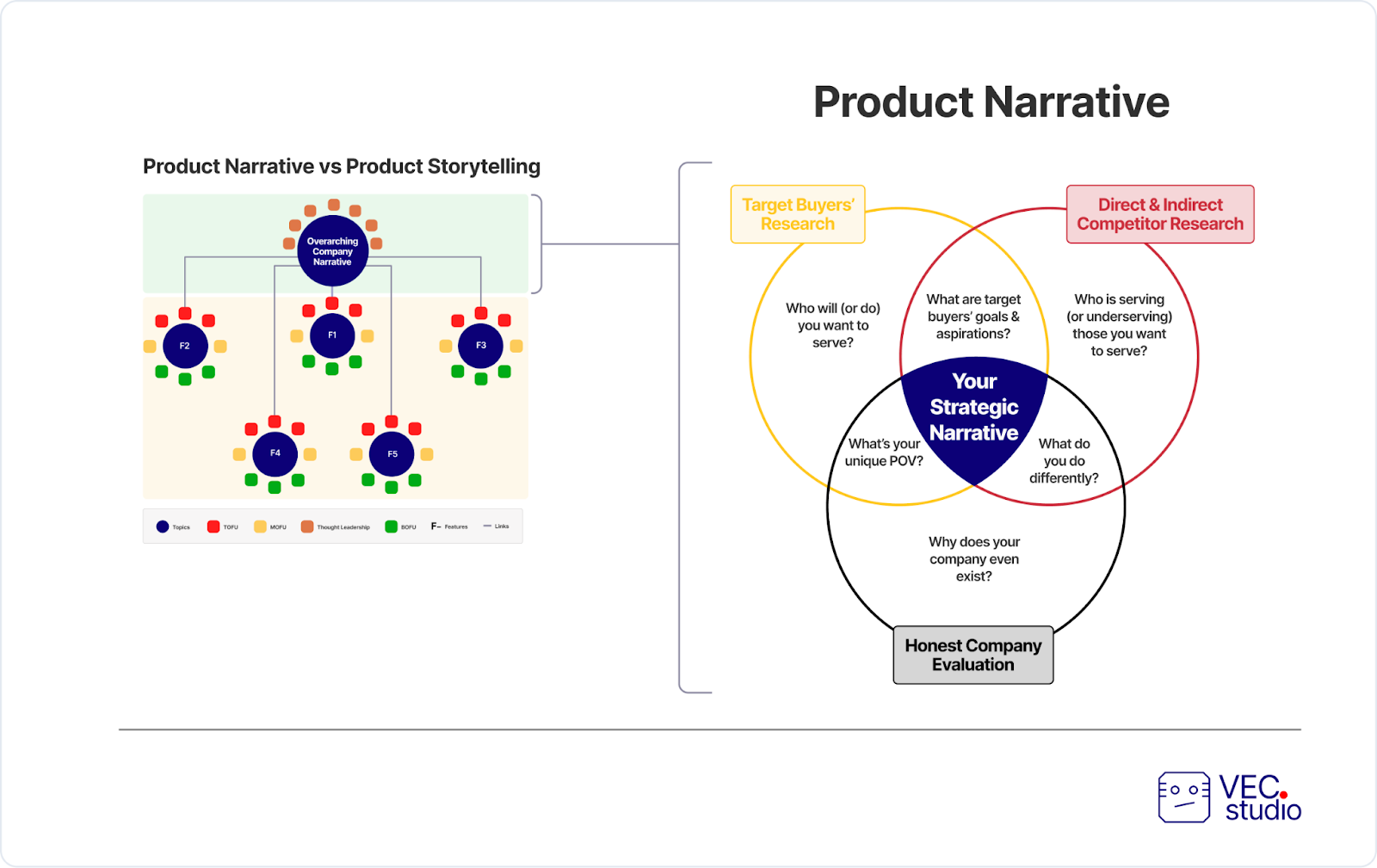
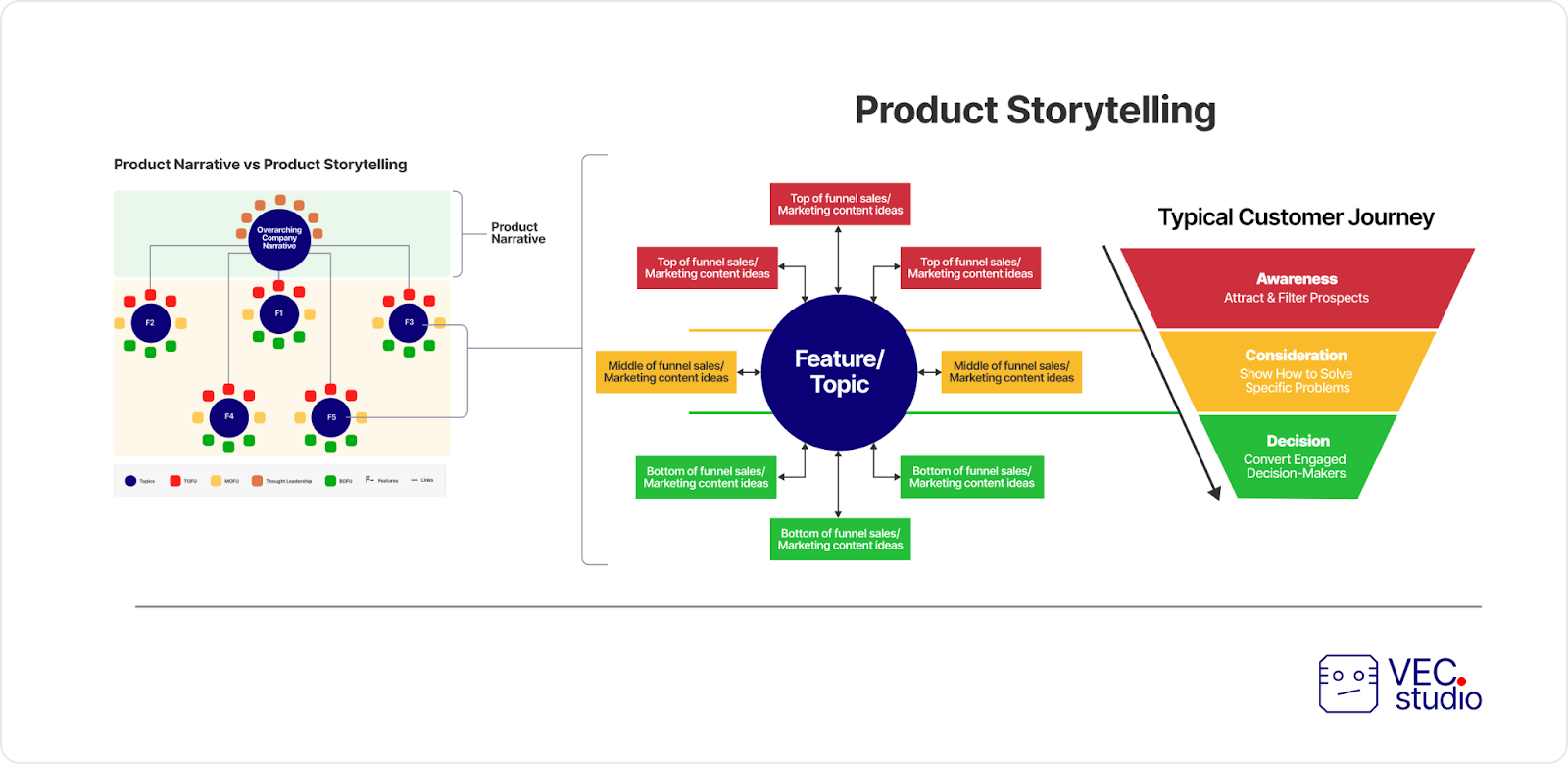
As in the Topic Cluster Content Strategy framework below, your narrative sits at the top. It encapsulates your company’s vision, purpose, and points of view (PoVs). All other sales and marketing efforts should lead prospects (and existing customers) to your narrative. But those sales and marketing efforts can’t just be about regurgitating your narrative.
As illustrated, each should have stories relevant to specific product features, ideal customer profiles, and the typical customer journey stages:

The examples below will clarify.
But before that, consider subscribing to...
B2B Product Narrative Examples
Exceptional product narratives address questions such as:
- What specific problems does your product solve?
- Who do you solve those problems for?
- How do you solve them differently?
- Why should busy B2B prospects even care or choose your startup, and not an alternative or a competitor?
What follows are examples of B2B SaaS companies whose product narratives at the overarching company level (i.e., their website) answer these questions succinctly. I took time to research and highlight why they are so outstanding.
1. Outseta: An All-In-One Story Told Well
All-in-one SaaS platforms have an upside. By consolidating different tools into an all-in-one solution, customers’ perceived value often increases.
But they have downsides, too. One is the difficulty in telling an overarching product narrative due to the various tools being consolidated.
Not Outseta, though.
Visit their website, and in seconds, you can perceive value from their overarching product narrative: A membership software for founders that removes the need for other software:
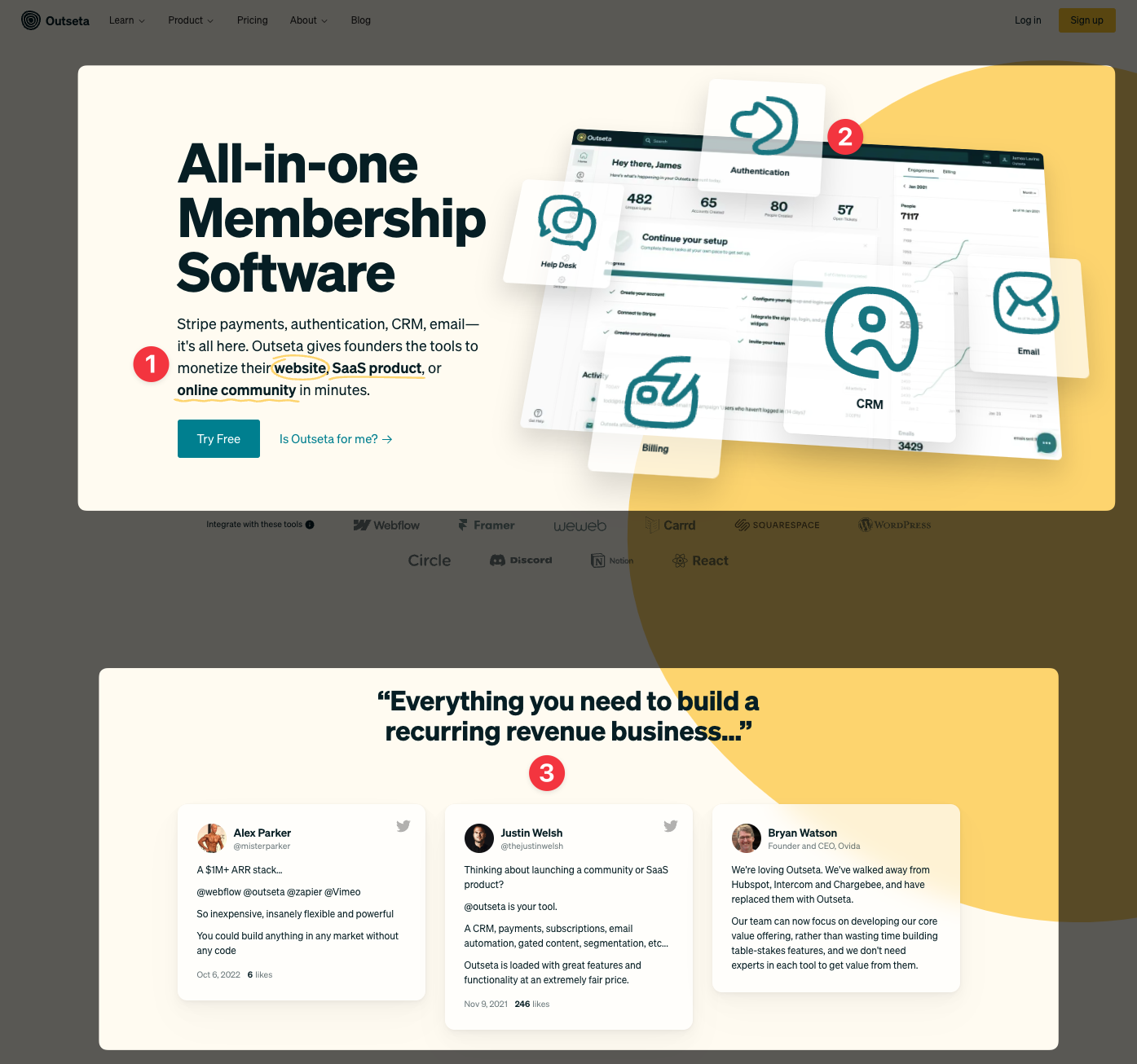
The subheading copy [1] articulates who the product is for, the problems it solves, and the desirable outcome to expect. This is further driven home by the illustrated product visual to the right [2] showing how Outseta works.
As shown, they follow this up with excerpts of customer success stories [3] of known founders using the product.
Social proof checked.
But you can do all that and prospects still won’t perceive the unique value of trading point tools for your all-in-one solution. Outseta knows this. As you scroll past the sections above, they don’t just articulate their narrative. But they drive their product value home with a visual that tells a story:

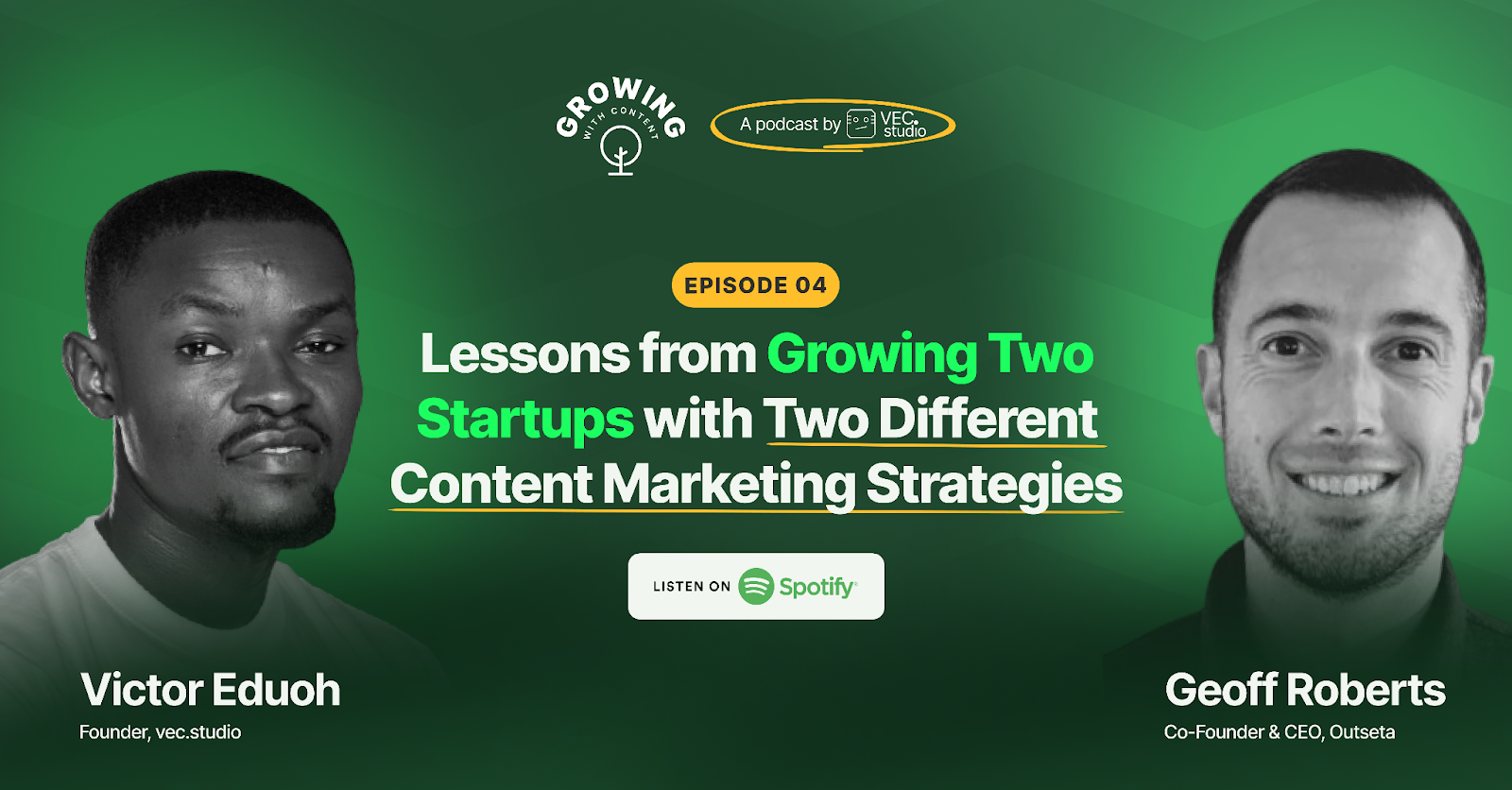
If you have an all-in-one SaaS and are struggling to articulate your overarching product narrative, take a page Outseta. And for an inside peek, Outseta’s CEO, Geoff Roberts, shared rare nuggets on VEC Studio’s podcast.
You can listen to his episode here:
2. Crayon: Vertical SaaS Narrative Done Well
For a vertical SaaS in competitive enterprise niches, you have two options for telling a differentiating product narrative:
- Make verbose claims of how your tech is superior or how you’re 1000X better than competitors in your niche, or
- Step aside and let your product and happy customers, who prospects will more likely resonate with, do the talking.
The latter works better.
And Crayon does it well:
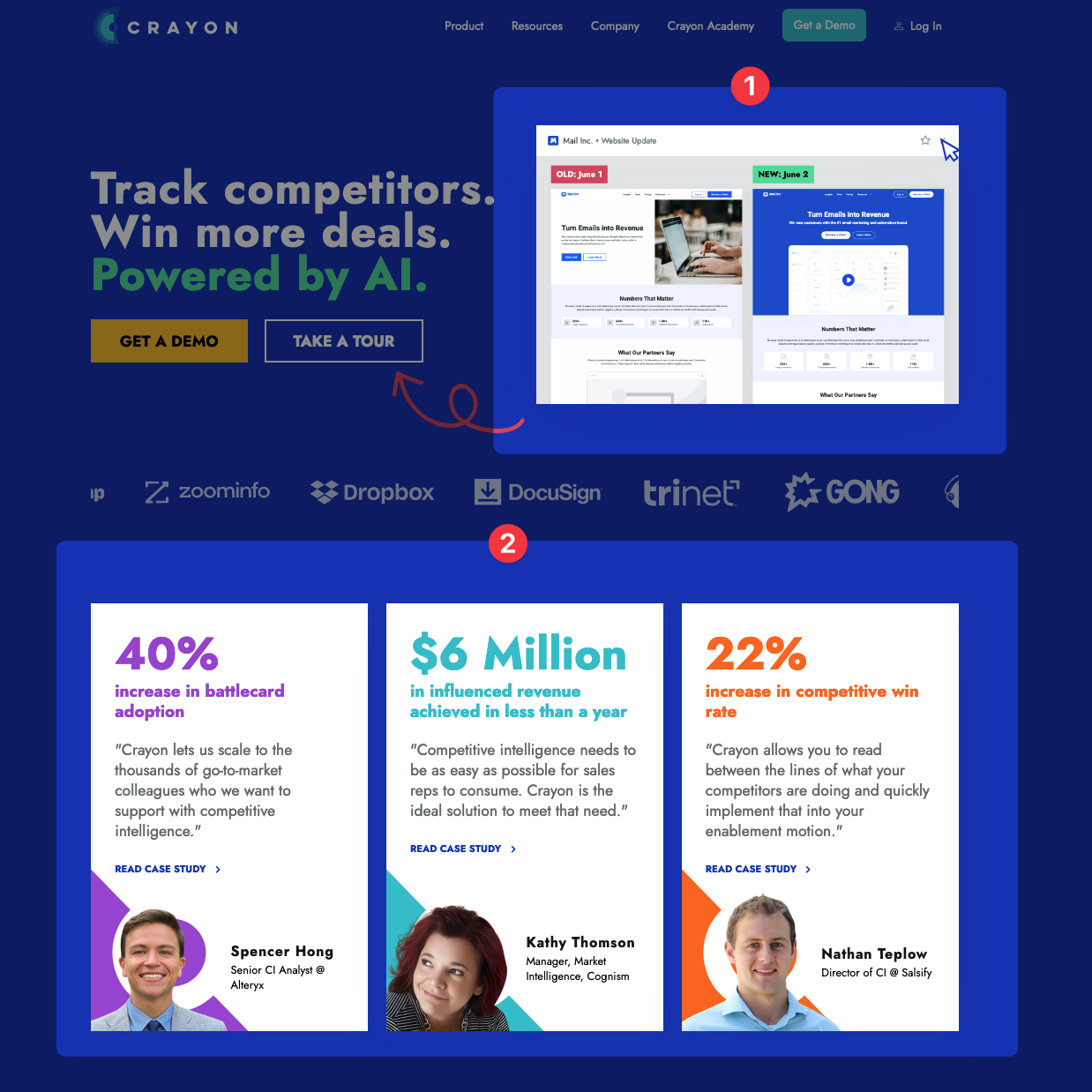
More often than not, an effective enterprise product narrative shows (and not just tells). That’s exactly what Crayon’s website does. The headline copy isn’t buzzwordy. It succinctly tells you what the product can do for you.
To the right-hand side [1], they show their product doing what the copy on the left says. Below [2], they don’t just list logos. They step aside for their target ICPs to see outcomes others like them have achieved with Crayon.
But this is often not enough.
B2B buyers are usually skeptical until they know exactly how your product will fit into their workflow. This means even when your overarching narrative resonates, they’ll still want to see how the product works.
Crayon doesn’t leave this to chance. As you scroll from the sections shown above, their site addresses such concerns.
…in two areas:
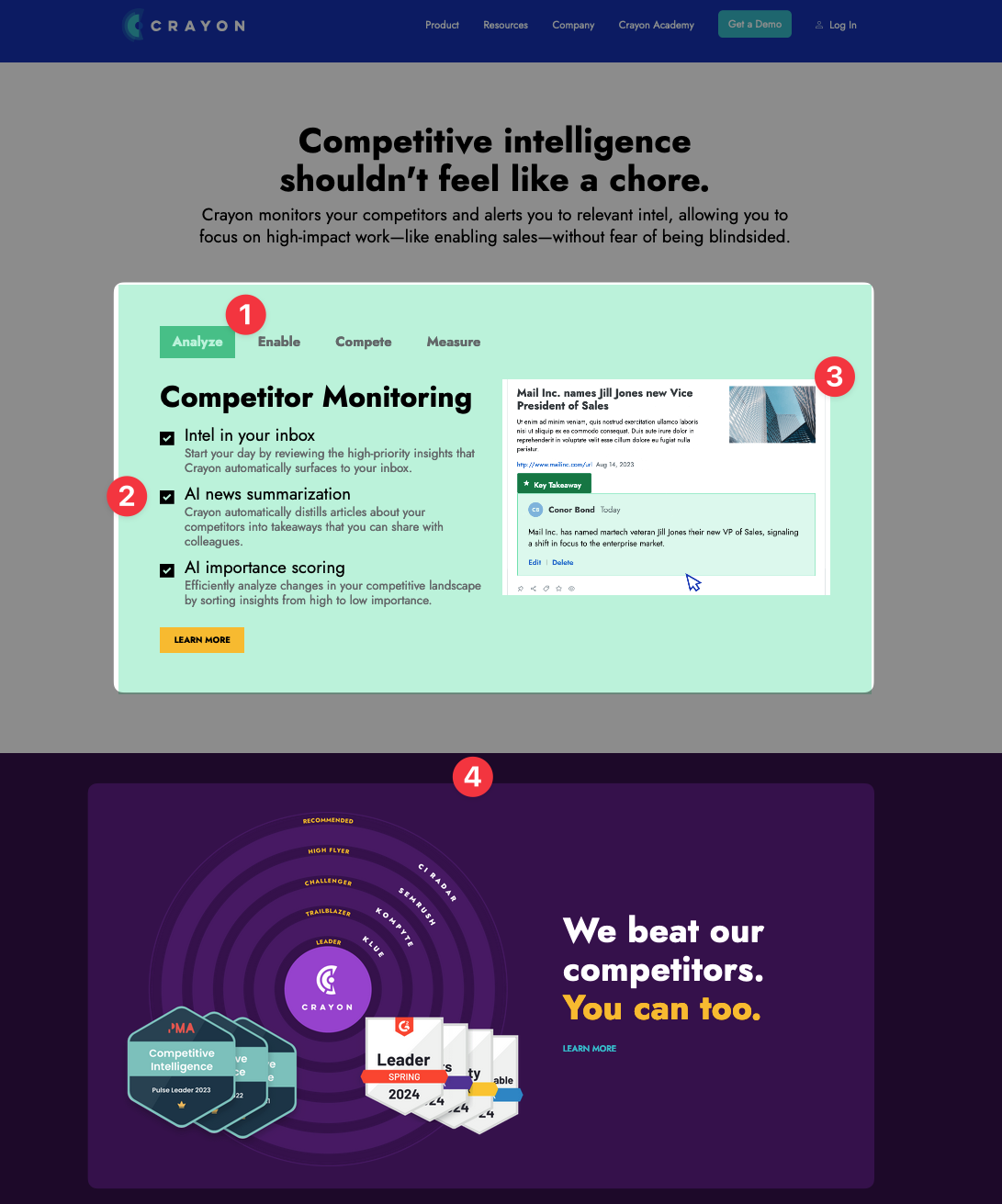
- They outline the specific competitive intelligence outcomes [1] you can achieve with their product. Under these are features [2], with accompanying copy telling how they enable you to achieve those outcomes. Then to the right, you can see how those features work [3].
- They use earned awards to dismiss their competitors [4], stressing that, as a competitive intelligence SaaS, they drink their cool aid:
I searched hard.
Few enterprise examples are as good as this.
But the next is great.
3. Attio: Disruptive Product Narrative Nailed
To stand any chance at disrupting a category as old as software itself, you need to break some rules. One of such rules involves making prospects rethink how they even define the category.
Attio is doing that with CRM.
If you’ve been disappointed with top CRM tools like HubSpot and Salesforce, Attio’s product narrative is an invitation to rethink the meaning of “CRM.” They do this by positioning themselves as the “customer relationship magic”[1] platform, and not just another CRM tool:
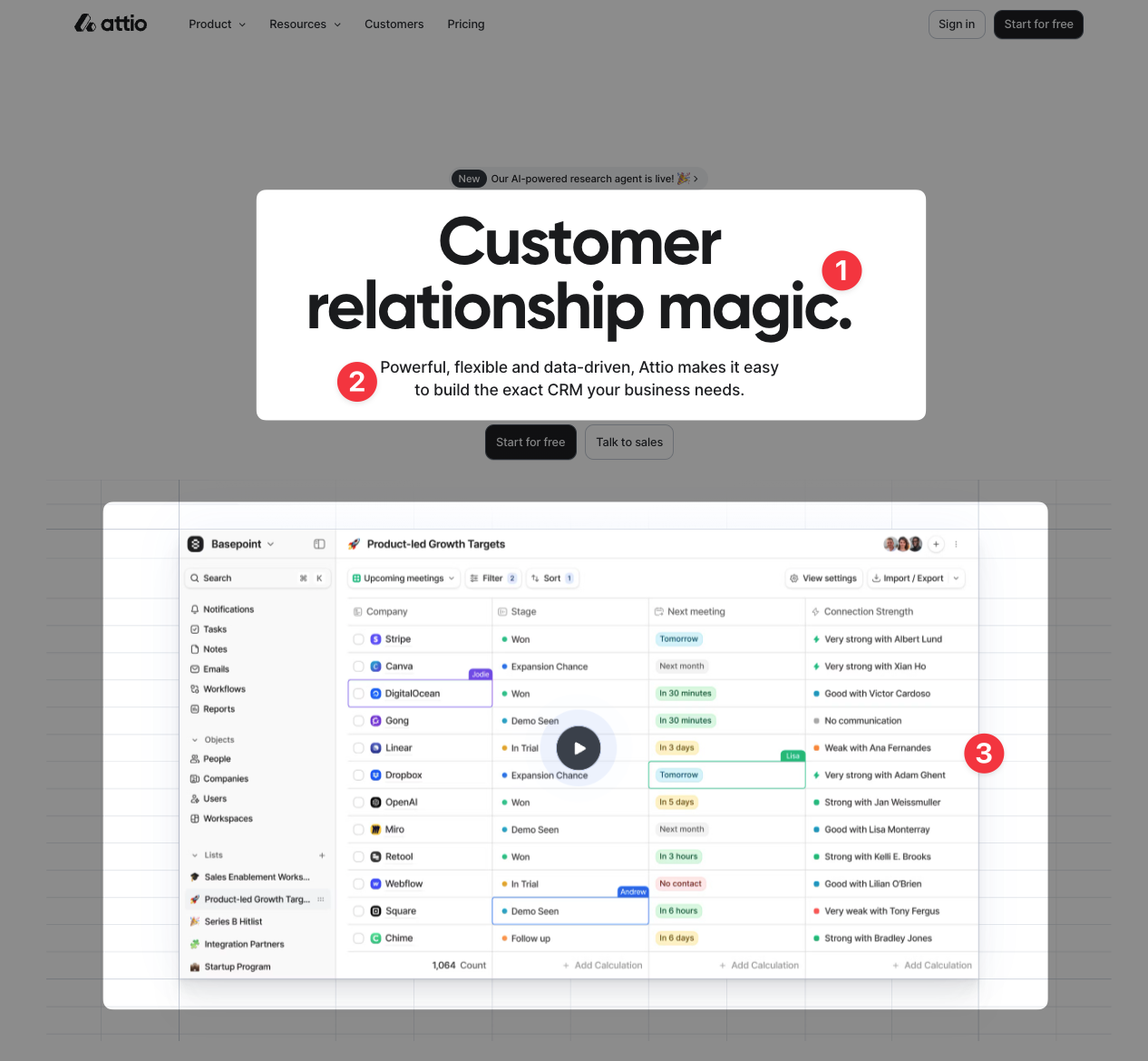
As with other examples, Attio doesn’t stop at making B2B prospects, who are often slow to change, rethink something they already know. They articulate their product’s value [2] and show how it works [3].
Leaving no stone unturned, Attio uses the next sections to make you appreciate the need for a more dynamic CRM. Doing this gives credence to performing customer relationship magic and not just managing contacts.
As shown below, they do it in three ways:
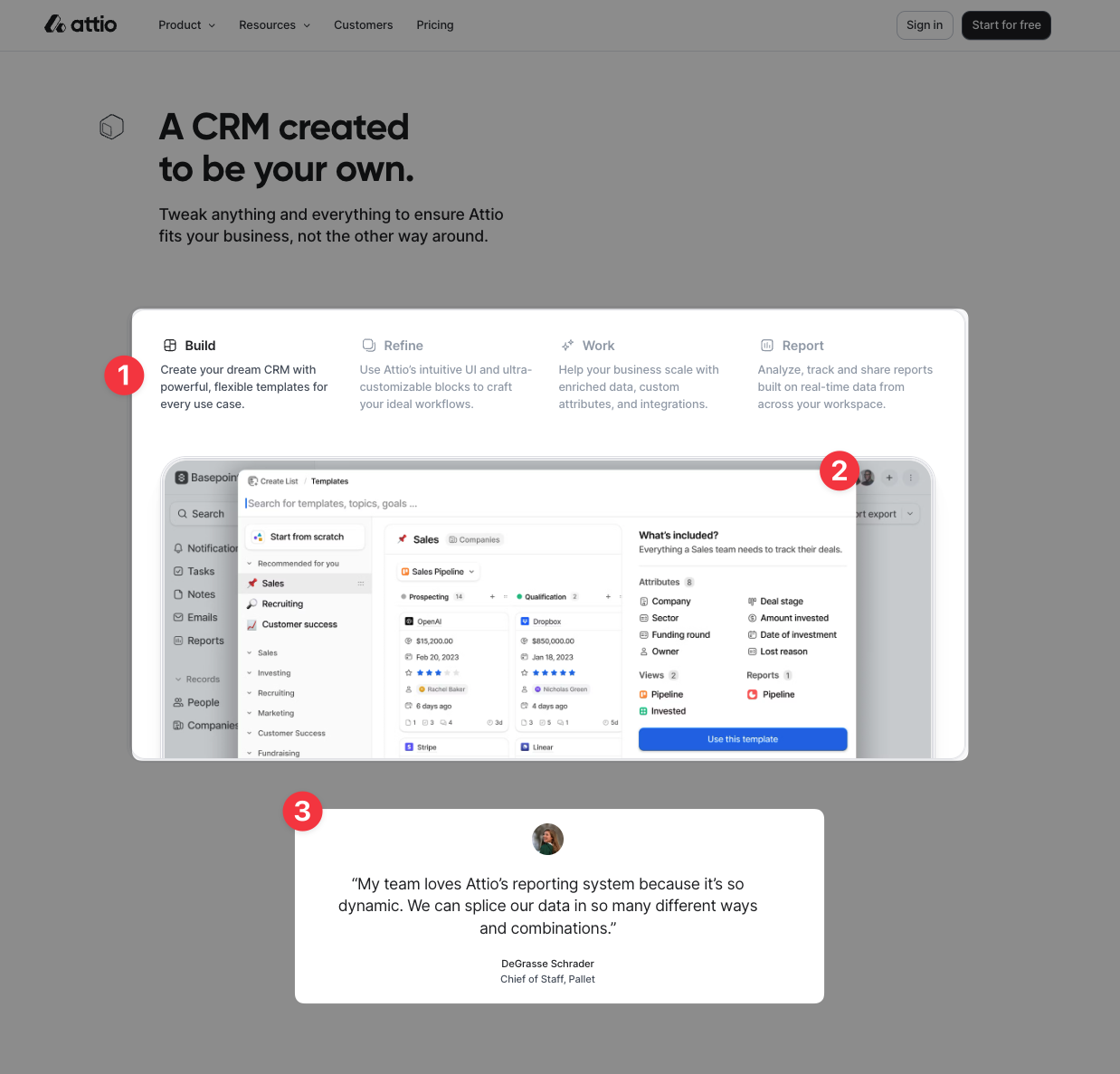
- Their entire site copy highlights how prospects can build their preferred CRMs. Take the screenshot below. The subheadings and supporting copy outline the specific ways Attio enables that [1].
- Under each of these, they show how the product does it [2].
- Each section ends with social proof. Specifically, customer success story excerpts showing others (i.e., their target ICPs) already using Attio to achieve customer relationship magic [3]:
I’ve used HubSpot all my CRM-using life.
I never imagined trying, let alone considering using, another CRM. But Attio’s narrative gave me a strong nudge to give the product a try. This speaks to how good it is. So if you’re in a SaaS niche already dominated by known behemoths, you should take a page from them.
Let’s now look at…
SaaS Product Storytelling Examples
An overarching product narrative is foundational. As the examples above show, it articulates your company’s differentiation, positioning, and why B2B prospects should choose you over competitors.
But your product narrative, no matter how compelling, means nothing if prospects don’t know you exist. You must create awareness at each stage of the customer journey, from top of the funnel (TOFU) to middle of the funnel (MOFU) and bottom of the funnel (BOFU). This is where product storytelling, executed through sales and marketing across the typical customer journey stages, comes in:
Unlike with product narrative, here, the goal isn’t just to hammer on how you’re different or why you exist. Yes, each marketing asset should always hint at your overarching narrative.
But at each customer journey stage, you need to address a specific problem and show (not just tell) how a feature of your product is a viable solution. The goal is to create curiosity and nudge prospects further down your funnel anytime they come across your marketing asset.
The product storytelling examples below show SaaS companies doing this well with their marketing assets across the customer journey stages.
1. Cyber Sierra: TOFU Content That Inspires Rethinking
TOFU marketing assets are often in the form of thought leadership content. As a result, good ones seek to educate or satisfy prospects’ curiosity on a new idea or topic.
Typically, to tick three boxes:
- Meet prospects where they are in their early stages of showing interest in a topic or its related solutions.
- Share why they ought to rethink what they knew about the topic or the conventional way of solving related problems.
- Make prospects interested in solving the problem with your product or learning more about the topic from your brand.
This TOFU piece by Cyber Sierra ticks all three:
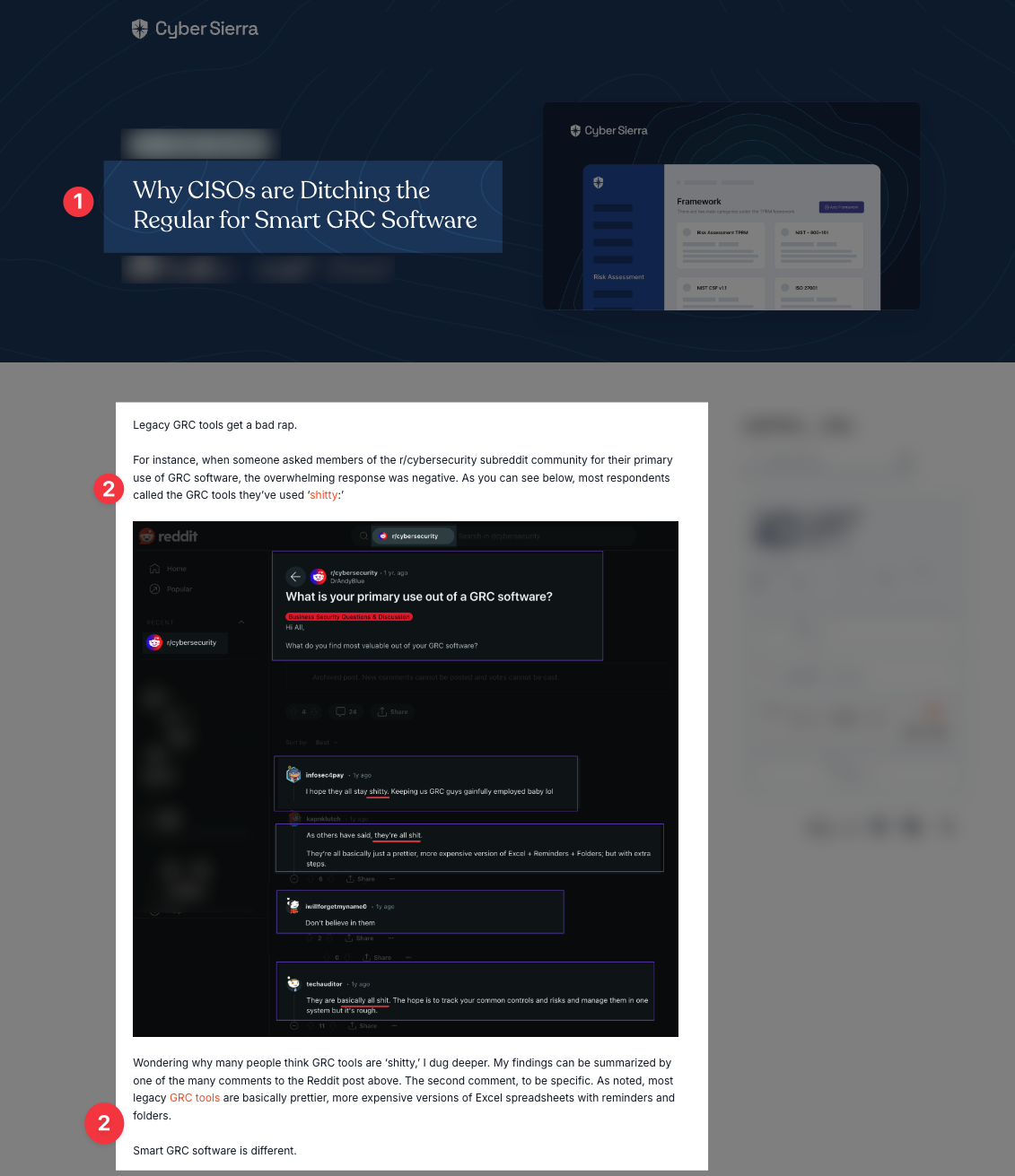
The title [1], “Why CISOs are Ditching the Regular for Smart GRC Software,” ticks off the 1st box. It calls out the target reader, CISOs. It meets them early in their interest in smart GRC software over legacy ones by inviting them to explore why other CISOs are ditching the regular.
The intro [2] lays the groundwork for ticking off the 2nd box. It uses a storytelling arc to surface negative things said about regular GRC software, setting the pane for the reader to also rethink it, as others have. This immediately segues into why smart GRC is different.
The rest of the article ticks the third box off. The main argument after the intro down to its conclusion, does one thing. It tries to make the reader interested in learning about smart GRC from Cyber Sierra or solving its related problems with Cyber Sierra.
As I explain in the clip below:
-
Integrating your product into thought leadership marketing as above requires expertise. You don’t want to shove your product down prospects’ throats, as they’re still early in their journey. But you also don’t want them to leave your article without perceiving your product’s unique value.
So you must study your brand’s narrative and learn how your product works, down to each feature. You must know when (and how) to weave both —narrative and product —into content through relatable stories.
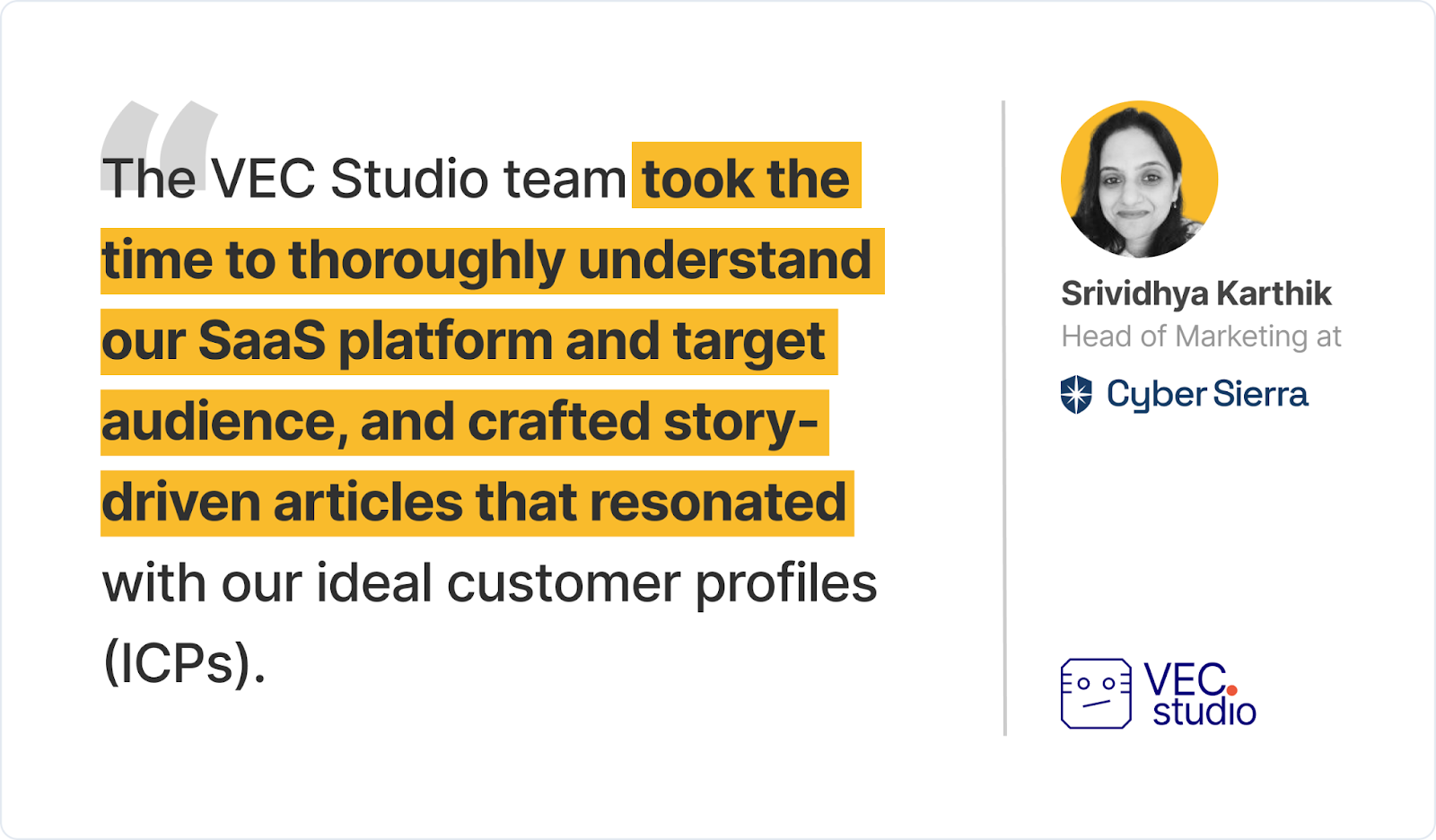
Doing those well is why Cyber Sierra raved about working with VEC Studio:
Learn how we do it here.
2. Crayon: How-to Guide that Truly Guides
Crayon, the competitive intelligence platform, makes a deserved second appearance in this guide. Thanks to this piece by Conor Bond, their former Content Manager. It is an excellent how-to (MOFU) marketing guide.
MOFU marketing assets have a purpose beyond education. They guide target audiences already familiar with a topic, its problems, and solutions toward making a favorable decision. As a result, no need to waste time defining terms target readers may already know. Use stories that match the mid-journey stage and experiences of your prospects and show (not just tell) how to solve the issues they are likely facing.
Conor Bond did all that:
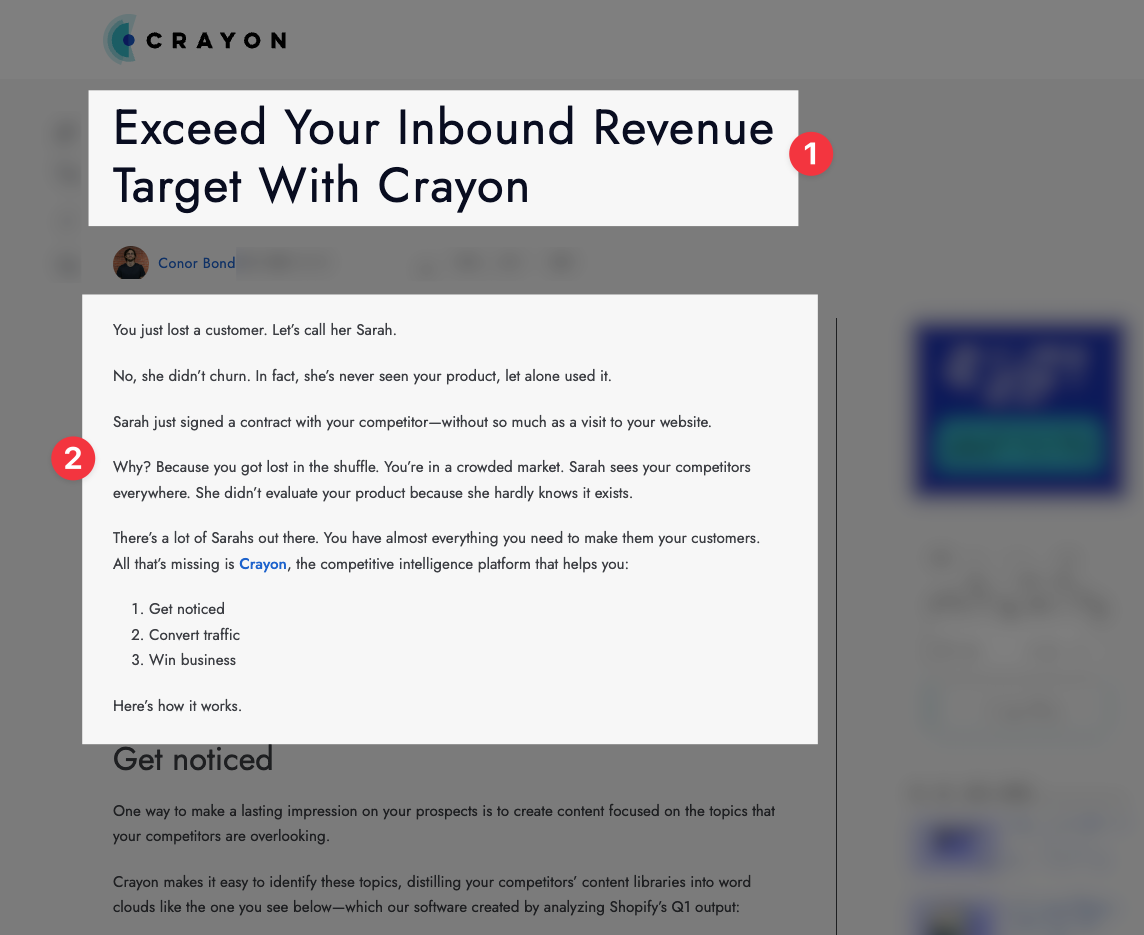
The title [1], “Exceed Your Inbound Revenue Target With Crayon,” speaks to someone already familiar with inbound revenue and trying to improve it. This is probably why Conor frames it as an invitation to improve it with Crayon.
The intro [2] tells the story of someone who has done all the basics but still can’t increase inbound revenue. It then promises to teach the reader how to do better. This is segued into showing how they can solve that with Crayon’s product, which the rest of the guide does.
As I observe below:
_
B2B SaaS MOFU guides don’t get better than this.
3. Mutiny: Sales Enablement Content that Sells
Next in the typical customer journey after MOFU guides are BOFU assets. These are often in the form of sales enablement and focus on driving conversions. As a result, they don’t just demonstrate how to solve a problem. They also show how a happy customer used a product to solve the problem to achieve results other prospects desire.
This one by Mutiny does all that well:
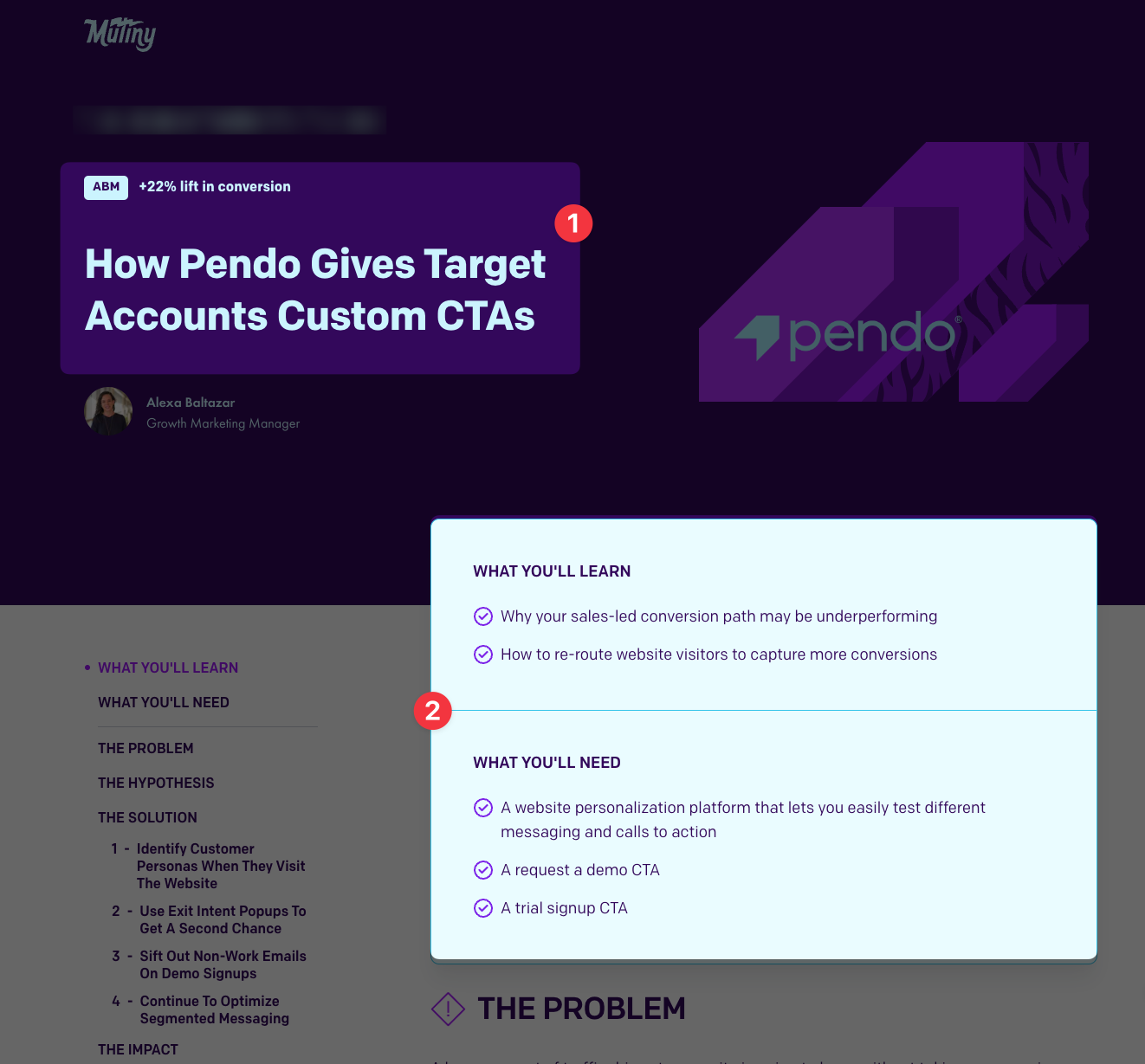
The resource itself is a customer success story crafted so well, it doubles as a sales-enabling resource. The title [1], “How Pendo Gives Target Accounts Custom CTAs” to achieve a 22% lift in conversion, clarifies it is a story of how Pendo achieved the result Mutiny’s prospects also seek. The resource opens with what they’ll learn from the story and what they’ll need (i.e., Mutiny’s product, of course) to achieve similar results [2].
“The Solution” part of the resource is where all the sales-enabling happens. Mutiny didn’t just show how to solve problems related to giving target accounts custom CTAs. But as I explain below, they show how Pendo solved those problems with Mutiny:
-
This shows that BOFU resources work better if crafted with a mix of success stories and product-led content. Mutiny does both so well.
More details of their process are here.
How We Design SaaS Product Narratives
Here’s our framework for designing product narratives:

I will go into more detail on this in an upcoming guide. Join our newsletter, Growing with Content, to get it once published.
But let me explain briefly. We start by finding answers to questions on three foundational pillars —Target Buyers’ Research, Direct & Indirect Competitor Research, and Honest Company Evaluation:
- Who will (or do) you want to serve?
- Who is serving (or undeserving) those you want to serve?
- Why does your company even exist?
We follow these up by digging for answers to the questions from the intersection of two foundational pillars in turns.
Questions like:
- What do you do differently?
- What are your points of view (PoVs)?
- What are your target buyers’ goals & aspirations?
There are many other ways out there to design a strategic narrative. But we’ve battle-tested this framework. Unlike others, it’s not just a framework based on theories. It may look simple, but a lot of research work goes into the process. We’ve used it to design product narratives for B2B SaaS startups. We used it to design VEC Studio’s strategic narrative:
And this is…
How We Execute Product Storytelling
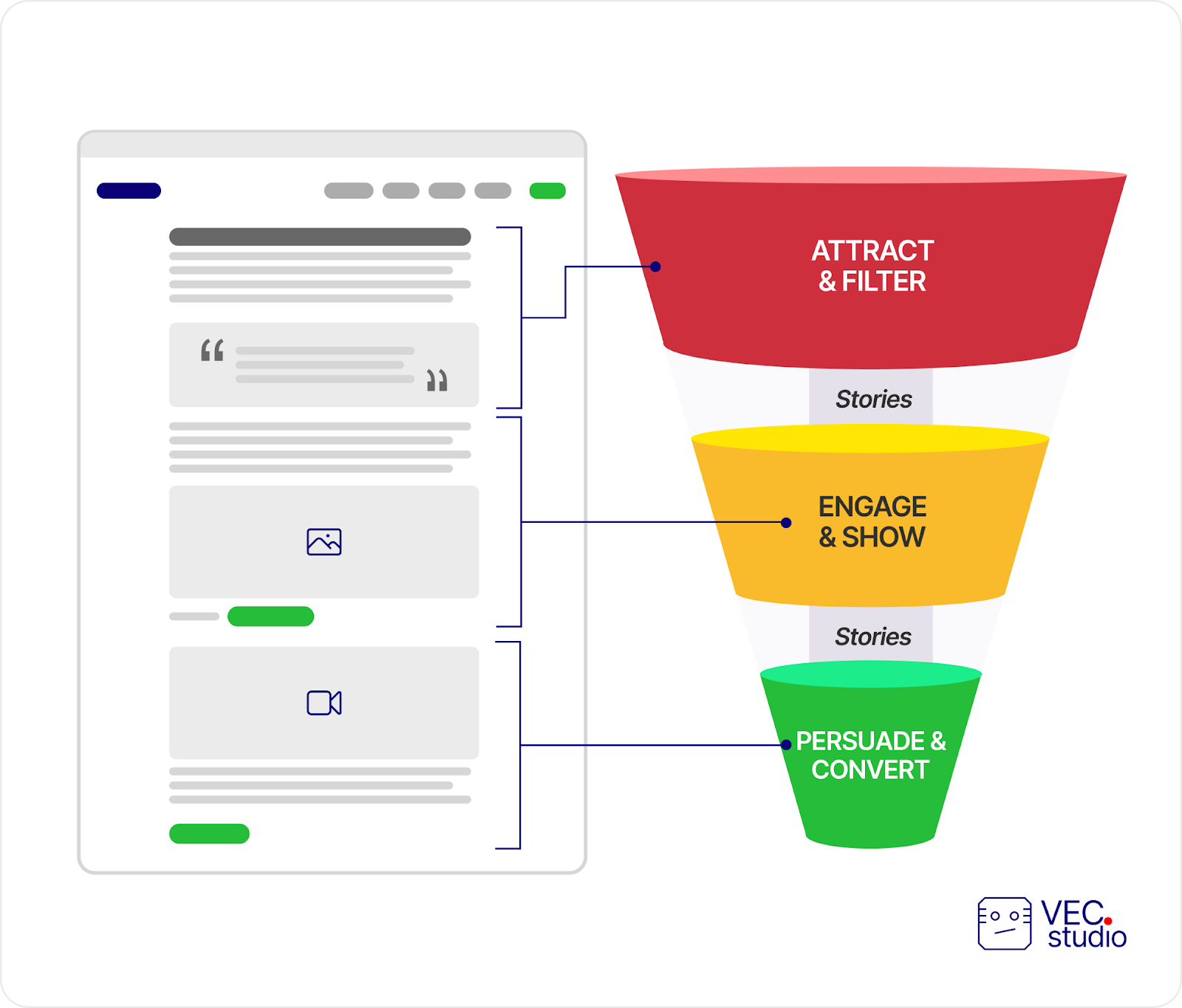
The three product storytelling examples above have one thing in common. Each is relevant to the respective customer journey stages. That is TOFU, MOFU, and BOFU.
As shown below:

When each sales and marketing asset you produce is relevant to customers’ journey stages, you’re more likely to:
- Resonate with who they
- Engage and show them how to solve their problems
- Compel them to act by clarifying a desired outcome they could also achieve if they do.
Storytelling is the key to meeting all three criteria. Stories your target B2B prospects can resonate with. Stories crafted with your product subtly woven in to show (not just tell) how it solves problems.
That’s what the nine (9) Product-Led Storytelling steps enable:
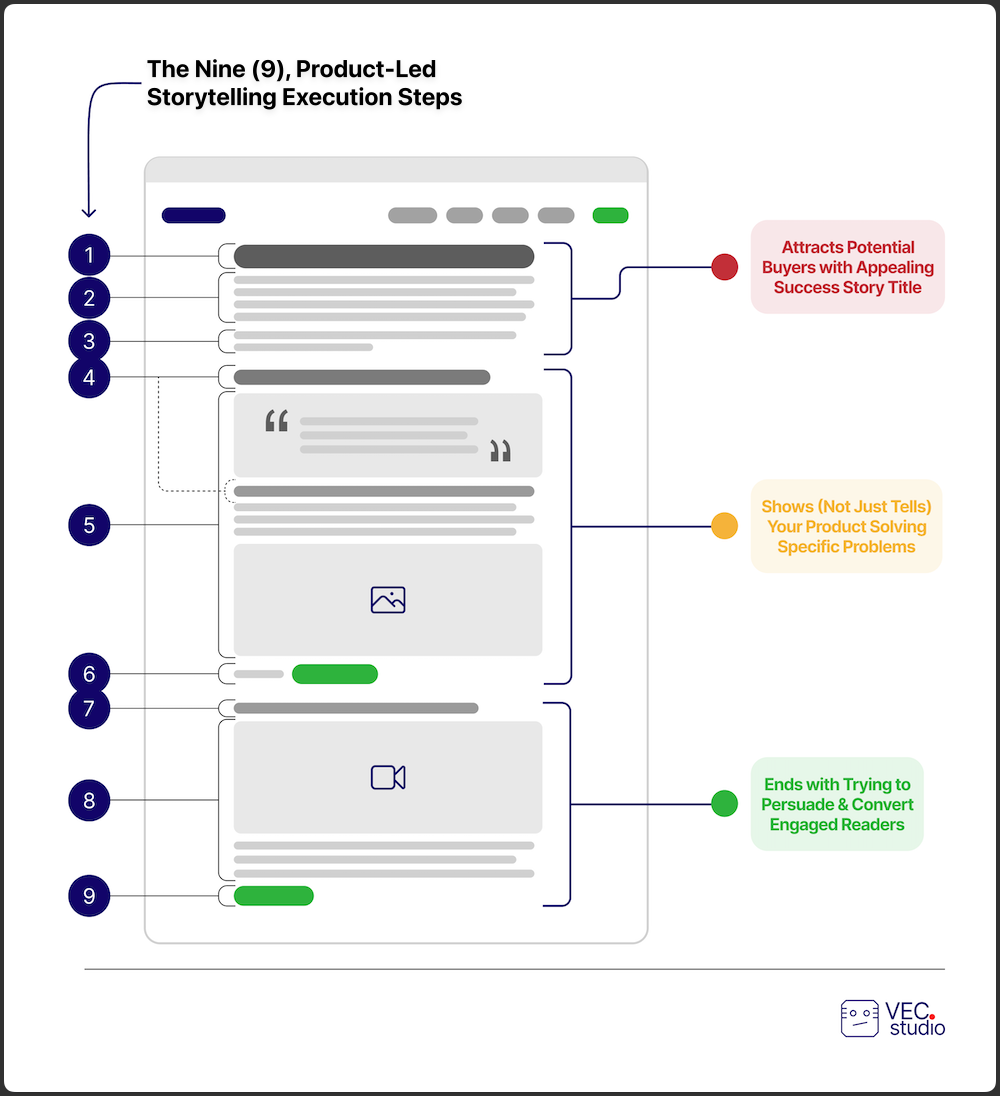
It’s the unique approach VEC Studio uses to craft sales and marketing pieces that come off as product storytelling. It’s how we’ve helped many B2B SaaS startups earn buyers’ mindshare and grow.
For instance, HoneyCart:
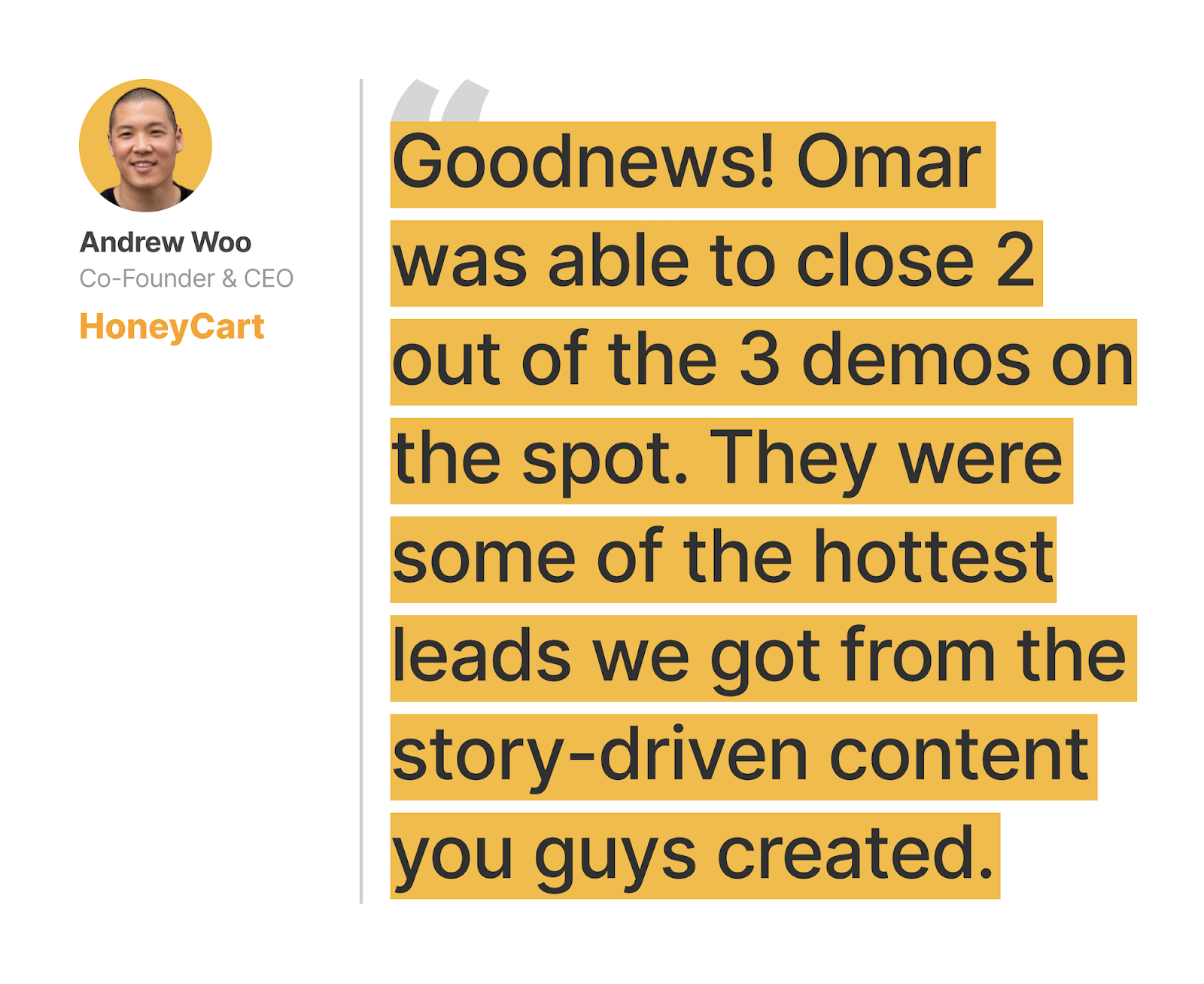
Read their success story here.
Victor Eduoh
Founder, VEC Studio
Founder, Lead Strategist @VEC. Thinker, reader, words-crafter, and husband to Omosede. Besides crafting product-led stories, I love scouting and grooming rare marketing talents.


Crafted with ❤️ in Port Harcourt