FREE Product-Led Storytelling Playbook
Get nowYou’re Not a Writer—And Don’t Even Be a Content Marketer
Shifting from being just a “writer” or “content marketer” can transform you into an indespensable product growth partner. This piece has real stories showing you how.


Victor Eduoh
Founder, VEC Studio
In mid-2021, we almost lost one of our best clients.
They’d signed VEC Studio to help them with consistent, targeted content meant to grow organic traffic. And we delivered exactly what they asked for: polished pieces, SEO baked in, all published on schedule.
The traffic poured in.
But traction was flat.
Engagement was low.
Conversions? Lower.
After a tense call one morning with the company’s CEO who was on the verge of churning, I made a risky (I should say desperate?) offer to salvage the account: “What if we added a few expert-led stories—narratives that speak to your ICP’s beliefs and pains—not as a replacement, but as a bonus, free of charge?”
He said yes.
So we created expert-led stories that subtly wove in their product while speaking directly to their buyers pains. Content that showed—not just told—the value their solution brought to a real-world problem their ICPs were facing at the time.
That decision changed everything.
Just two weeks later, they started getting inbound interest from qualified leads who said, “This article felt like it was written just for me.” A few of those leads converted on the spot.
Not only did we retain the client for several more months, but they doubled down on the storytelling-led approach.
That risky shift taught me that growing a…
Content Marketing Career Isn’t About Writing Content
It’s about solving problems.
If you’re like most ambitious SaaS Content Marketers—who dreams of being allowed to create work you can be proud of, work that makes you indispensable—you’ve probably felt this too: the tension between what you want to create and what the company allows.
Pushback. Limits. No space to experiment.
But here’s the real twist:
It's not the company's fault entirely. Most content marketers frame themselves as writers or creators—not as problem-solvers. And that framing limits how leadership sees their value.
For instance, after using stories to reorient their content toward solving their ICP’s real struggle in 2021 and retained their business, HoneyCart’s COO, Omar Santana, said this a month after:
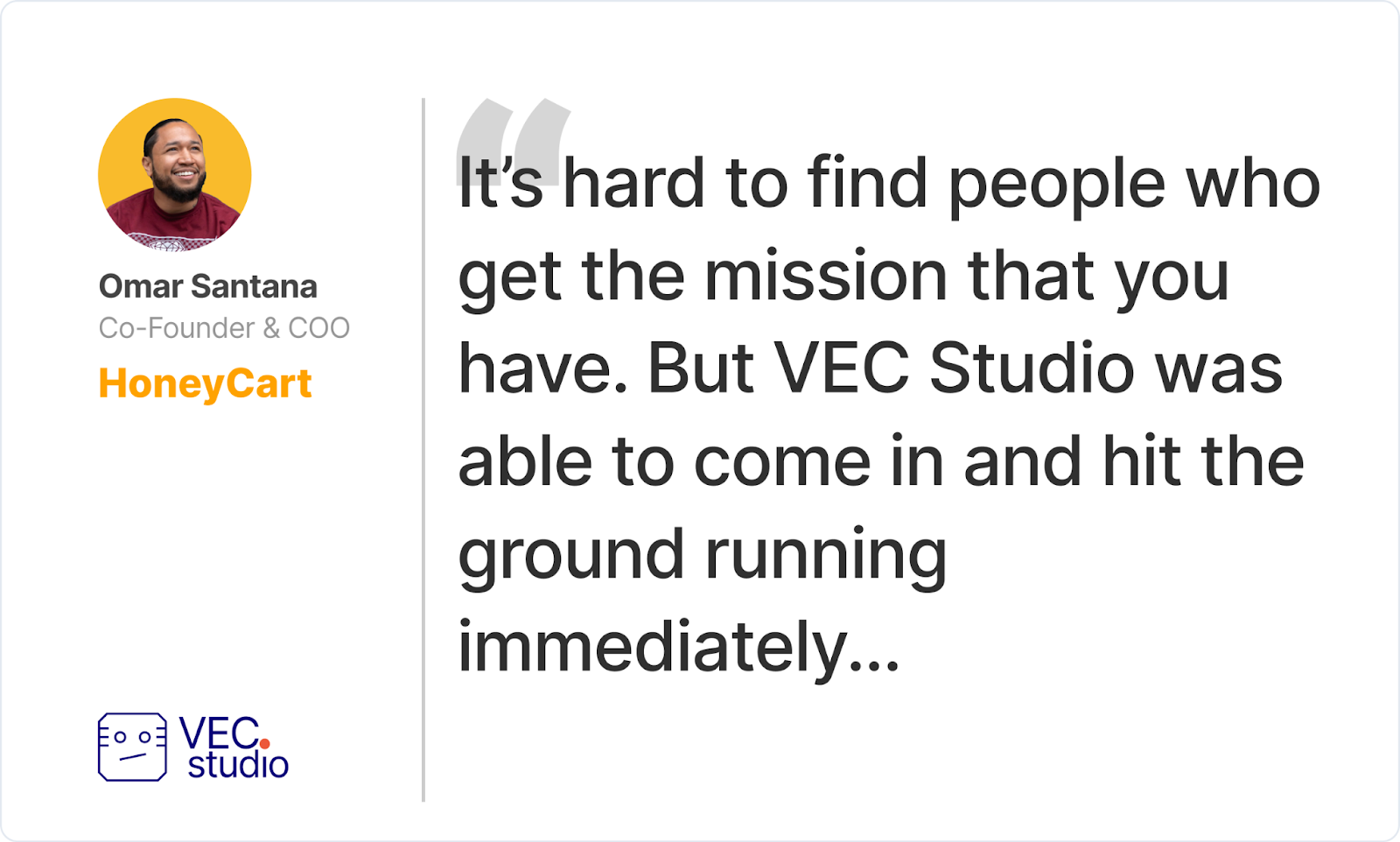
He wasn’t praising good writing.
He was praising alignment—content that showed HoneyCart’s ICP that the company understood their world and had a real solution.
That is what makes a content marketer indispensable today. Not just clean copy. Not clever headlines. Not even SEO prowess.
It’s knowing what business problems needs solving, and positioning each content you craft as the bridge between one of those problems and the product you’re marketing. It’s waking up to the reality that the core reason behind a startup hiring you is because they have a product to market and sell. Therefore, you must always keep the marketing and selling of that product in mind.
Before we I go on…
If you want bi-weekly stories like this—packed with lessons that help you grow your content and product marketing career and deliver ROI—subscribe to the Product-Led Storytelling newsletter →
Grow As a Startup Content Marketer? Become a Problem-Solver
The idea for writing this piece came when I hopped on a mentorship call with a smart in-house content marketer who sounded… really stuck.
Let’s call him Aswan.
From our call, it was clear that Aswan is skilled—he understands writing principles, excels in SEO, has a portfolio of high-ranking content marketing pieces, and dislikes AI-generated nonsense. But he felt boxed in. Leadership didn’t seem to see his value beyond keyword rankings. He wanted more autonomy to create content in new formats and make a bigger impact, but every idea he pitched hit a wall.
That conversation stuck with me. Not just because I’ve heard it before (many times), but because I’ve lived it.
This article?
I opted to create it because of that conversation—and the dozens like it I’ve had with freelance and in-house SaaS content marketers who feel creatively suffocated. What I’ve realized is this:
The people who break out—the ones who turn content into a lever for enviable career growth—don’t wait for permission. They reframe how they show up and what they bring to the table: not as writers, not even as content marketers, but as problem-solvers.
That’s what I had to do when we started creating expert-led stories for HoneyCart. We didn’t set out to “write good content.” Our mission was specific: get their product in front of decision-makers faster. We stopped writing to check boxes and started crafting content to open pipeline. The difference showed up in results—and in how HoneyCart viewed our role.
So if you want to grow in this space, the first shift is internal.
Specifically, you must…
Move From Writer to Thinking Like a Strategist
Being a great writer is a strength.
But it’s strategy that makes your work matter in B2B SaaS.
That means asking better questions at the start of any project:
- Who’s this content for?
- What stage of the buying journey are they in?
- What problem are they actively trying to solve?
- And how does our product slot into that moment?
Too often, content marketers start with: “We need to rank for this keyword” or “We want to publish two blogs a week.” You could rank for that “keyword” and “publish consistently” with zero results to show.
But once your default thinking becomes:
“What’s the business problem this content solves and how can I better execute so it leads ideal buyers to our product?”—you start crafting stories that move the needle. And leadership notices.
For instance, one of the expert-led stories we created for HoneyCart broke down a silent, costly problem among their ICP, drop-off caterers: COVID was killing their business, they needed hope, something to believe in. Empathizing with them, we didn’t pitch the product directly. We just told a story. And because that story spoke to their buyers’ hearts—many of whom reached out, already warmed up.
Strategy isn’t theory.
It’s knowing your content’s job—and getting it done.
Next?
Obsess Over Building Inbound Leads as a Content Marketer
Startups pour millions into paid ads. Why?
Because ad dollars = visibility, which (hopefully) = pipeline.
But here's the secret no one says out loud: If you can prove content drives similar—or better—results, you become truly indispensable.
That’s what happened with another of our clients who was spending heavily on ads with minimal conversion. We pitched them an alternative: let’s build content that better educates your ICP’s once they visit your site, earns their trust, and drives action—without asking for anything upfront.
We used founder-led narratives, insights from their customer calls, and subtle product hooks baked into the storytelling. Within three months, they had warm inbound leads referencing specific content pieces in their demo requests.
The good thing with content marketing is that you don’t always need a massive budget to generate leads. You just need content that hits the right nerves and resonates deeply with the right people.
Add in a strong distribution process (which I also cover in the PLS Execution Course), and you’ll outcompete bigger brands with better funding or ad budgets.
But if you want…
Qualified Leads Through Content: Make it ‘Product-Led’
Here’s a hard truth:
Even the best content can be read, loved, and then forgotten.
That’s the content we all love writing but secretly hate measuring.
Now contrast that with what I call Product-Led Storytelling—content that uses resonant stories to naturally weave in the product’s unique value as part of the solution, not as a bolt-on CTA at the bottom.
For HoneyCart, we didn’t just say “clients ghost after sampling.”
We showed how other drop-off caterers used their platform’s custom invoicing to close faster and waste less food. That’s the magic: the product you’re marketing becomes part of the narrative. Part of the reader’s “aha” moment. And when you do this well, you won’t need to nudge people to book demos.
They’ll ask.
It’s this shift—from content for content’s sake to Product-Led Storytelling—that turned the content marketers at our Studio from generic content vendors into strategic partners. And it’s the same approach I now teach step-by-step in the PLS Execution Frameworks Course.
So if you’ve been stuck feeling like “just the writer,” it’s time to make a shift. Your job isn’t to write more content. It’s to solve the right problems—with stories that spark action, not just applause.
Want to see how it’s done?
→ Check out the PLS Execution Frameworks Course.
Storytelling, the Additional Skill Content Marketers Need
If you’re still introducing yourself as a “content writer,” I get it.
It’s what most of us were trained to be.
But let me be blunt: writing isn’t what helped VEC Studio turn simple blog posts into revenue for HoneyCart and other startups like Cyber Sierra and Blackthorn. It wasn’t even that we subtly showcased their product.
What really moved the needle?
We told stories—their story—in ways their ideal customers recognized themselves in. We didn’t just switch up formats. We switched up the entire strategy. Instead of publishing another SEO blog post (which, by the way, was getting traffic but no traction), we tried something different.
In HoneyCart’s case, for instance, we created an expert-led, founder-narrated thought leadership piece titled:
“Post-COVID Profits: 5 Experts Share How Caterers Can Bounce Back with Over $45k/year In Savings.” 👉 Read the full article
The idea?
- Interview experts in drop-off catering
- Structure their insights into a compelling comeback narrative
- Layer in HoneyCart’s product story without pitching it
- And most importantly: leverage those experts’ audiences to drive targeted distribution to HoneyCart’s ideal customers:
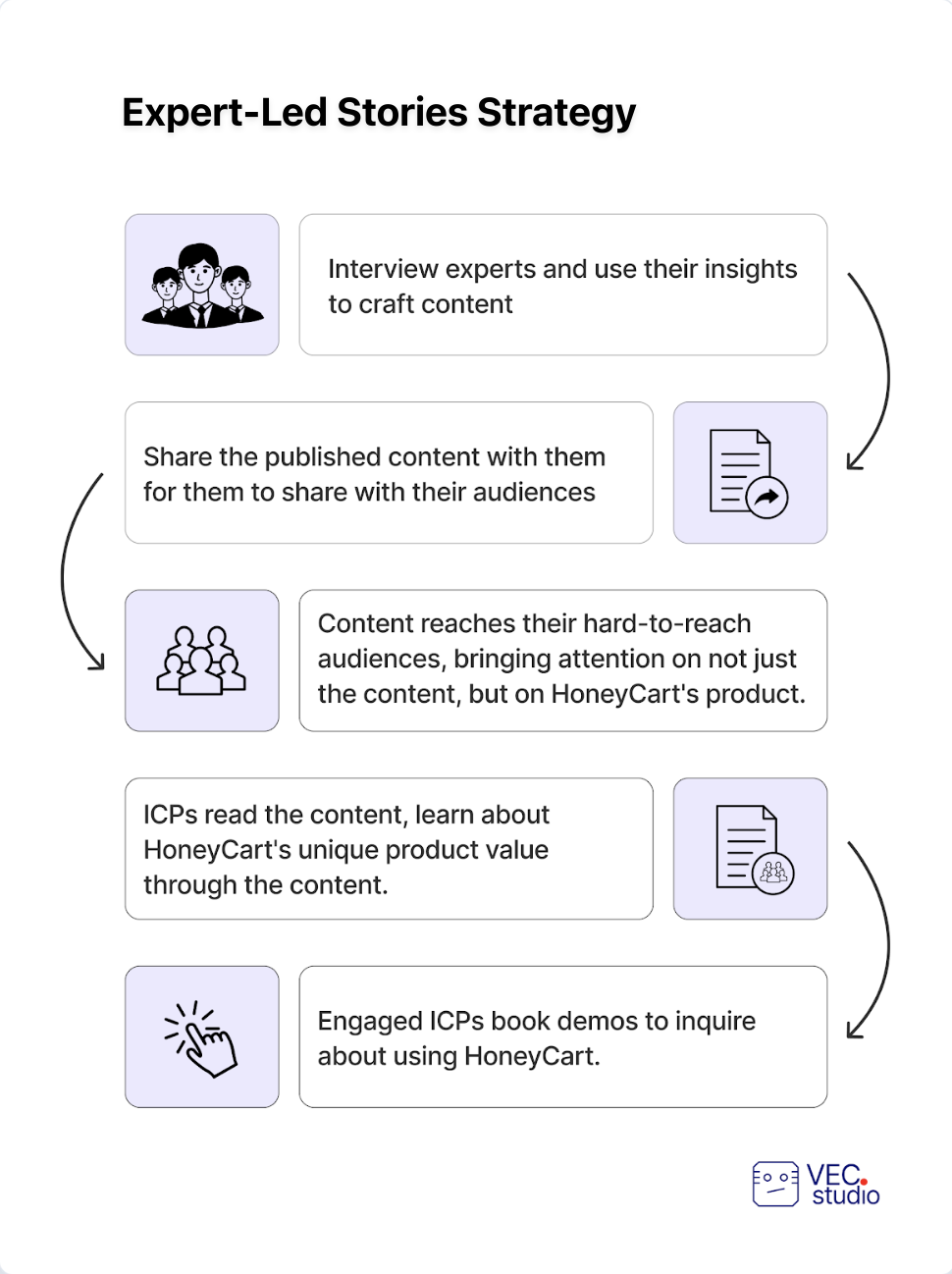
That article didn’t just resonate. It converted.
One reader told HoneyCart’s founder:
“I saw that piece and thought—finally, someone gets what we’re going through. Whoever wrote that knows what they’re doing.”
That’s the power of storytelling.
And it’s the skill most ambitious content marketers overlook—until they realize it’s the one that changes everything.
Let’s unpack how a bit.
Storytelling Enables Impactful SaaS Content
When you lead with storytelling, something powerful happens: Your product doesn’t feel like a list of features. It feels like a lifeline.
The expert-led article didn’t explain HoneyCart’s “catering automation” tech. It showed what happens after you use it: fewer ghosted clients, less back-and-forth, and an extra $45k in yearly savings.
It wasn't a pitch.
It was a roadmap to survival—delivered through trusted industry voices. Each expert brought both authority and audience, helping HoneyCart reach their ICPs organically through personal shares, email lists, and word of mouth.
It was the first time HoneyCart saw content drive so much qualified pipeline, and not just clicks. And that’s when I further confirmed what I had been brewing in stomach:
Writing great content wasn’t enough.
We had to tell the right story—to the right people—in the right way.
And had this to show:
“We closed two deals two weeks after the article went live. One lead literally said: ‘I saw that expert post—finally felt like someone understood my drop-off catering business.’” — HoneyCart’s Founder.
Storytelling Can Get You Hired for Global Content Roles
Want to hear something else storytelling can do?
It can land you global content roles—even if you’ve never worked outside your home country.
Jeremiah Ajayi was one of VEC Studio’s former writers. He mastered the Product-Led Storytelling approach with us, helping craft stories that blended business outcomes with product relevance.
Fast forward today: he’s the Content Marketing Manager at RemotePass where he’s leading their content marketing efforts and crafting top-tier pieces that’s helping to tell the startup’s story and helping them drive growth globally.
Same with Tamilore Sonaike.
While at VEC Studio, she mastered and applied the PLS framework across multiple client projects—turning ideas into StoryBriefs & Outlines for crafting pipeline-generating pieces. Today? From her home base in Lagos, she landed a Strategist role at Fenwick Media, a writing and design studio, serving several global clients.
They didn’t do this by writing SEO-first blogs.
They earned it by learning how to craft product-led content that uses resonant stories to get to the meat of showing (not just telling) the unique value of the products they are marketing.
But don’t just take it from me:
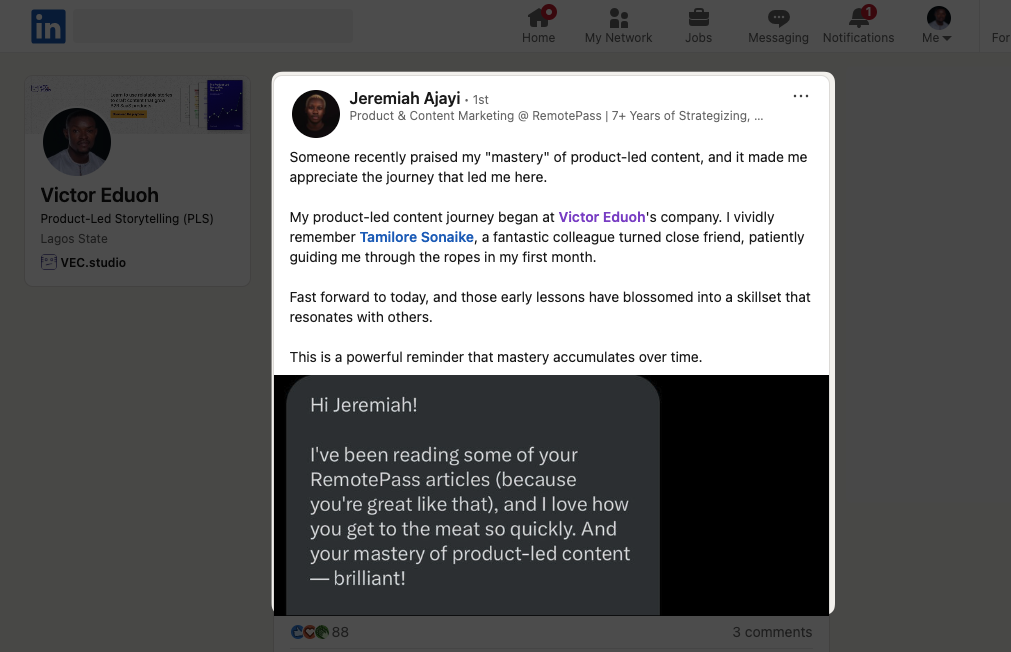
This is bigger than blogging. It’s a career path.
And it starts with a shift in identity—from being another random “writer” or content marketer” to being a strategic [product-led] storyteller.
That’s how to…
Earn the Content Marketing Career You Desire
When we published that expert-led HoneyCart article, we didn’t know if it would work. But we knew one thing: the SEO playbook wasn’t working.
The traffic wasn’t converting.
The right people weren’t reading.
So we went off script.
We ditched the calendar.We interviewed experts.We focused on distribution before drafting.And we structured it all using the Product-Led Storytelling framework.
The result?
- Immediate inbound pipeline
- Extended client retention
- A repeatable system for resonant content creation
- And a career differentiator for everyone who touched the project
If you want to do work that makes a difference…If you want to build a portfolio that lands global roles…If you want to stop creating content that’s easy to ignore and start crafting pieces that make people care...
Then you don’t need another writing course.
You need to learn how to tell the right story to the right person at the right time—while tying it to product value without pitching.
That’s what the Product-Led Storytelling Execution Frameworks Course teaches you to do. Everything I just shared?
It’s broken down step-by-step inside.
→ Check out the PLS Execution Frameworks Course (If you’re serious about becoming a strategic storyteller—this is your next step.)
Victor Eduoh
Founder, VEC Studio
Founder, Lead Strategist @VEC. Thinker, reader, and wordsmith. Before all that, though, I am Omosede’s husband. And besides crafting product-led stories, I love grooming rare writing talent into worldclass product storytellers. That you?


Crafted with ❤️ in Port Harcourt